Society is ageing, and with it, the requirements for last-mile services are changing. Particularly when it comes to bulky goods, such as TVs, household appliances or rehabilitation products, there is a growing demand for accessible delivery services. These services make an important contribution to customer satisfaction and enhance service quality in an area that has become a key factor in the purchasing decision for many people. But what exactly does accessible delivery mean in practice?
Why Delivery Standards Need to Change
With demographic change in Germany, the number of people over the age of 65 is steadily increasing, both in urban and rural areas. This customer group is becoming increasingly digitally active, regularly shops online and expects the same level of convenience as younger customers. At the same time, there are often challenges in everyday life, such as limited mobility, uncertainty when connecting technical appliances and a lack of support at home.
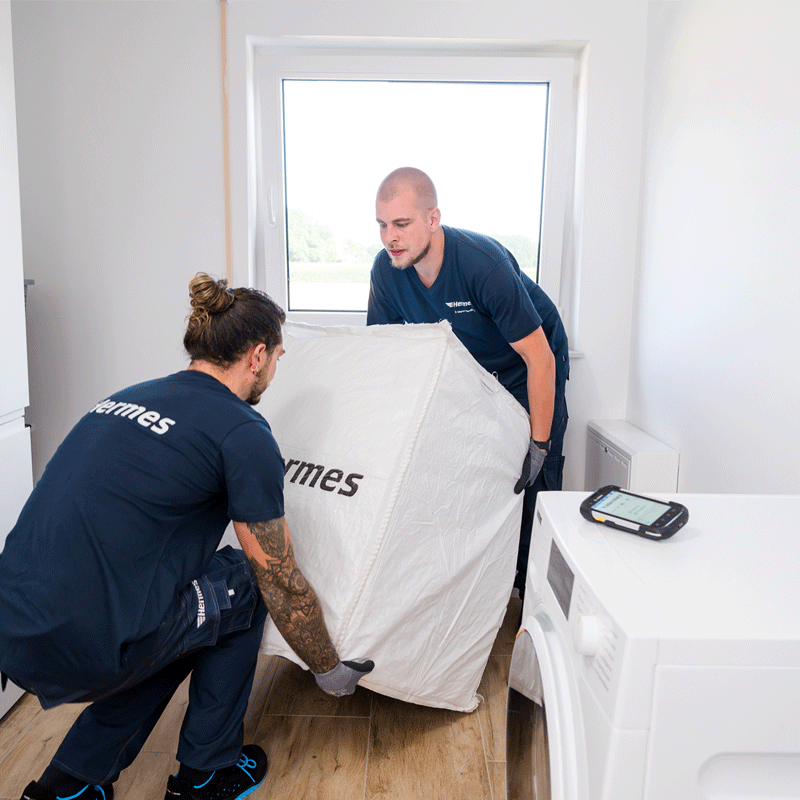
This creates specific challenges for bulky goods logistics. Traditional delivery services quickly reach their limits when appliances need to be not only delivered, but also positioned, connected and explained. This is where 2-man handling comes into play, adapted to accessibility requirements. The aim is to develop service processes that are safe, easy to understand and transparent, contributing to a positive customer journey, including for customers who may need more time or do not have support available at home.
Step 1: Transparent Planning and Accessible Communication
Accessibility does not begin at the customer’s doorstep, but with the very first contact. The order confirmation already sets the tone for whether older customers feel well informed and supported. An age-friendly delivery service therefore relies on clear and easy-to-understand communication tailored to the needs of an ageing customer base.
The Key Communication Elements at a Glance
- Flexible or extended delivery time slots that take into account customers’ daily routines, for example avoiding delivery times that are too early or too late, as well as individual mobility needs.
- Clearly worded order confirmations that transparently explain the type of delivery, the delivery time frame and any additional services booked.
- Advance notification by phone with clear communication particularly for customers without digital devices or those who may require additional clarification.
- Proactive support before delivery for example the option to clarify questions about assembly, old appliance removal or product operation by phone
Step 2: Realistically Assess the Delivery Situation and Plan Accordingly
Steep staircases, narrow hallways and buildings without lifts: what may be routine for customers with unrestricted mobility can quickly become a barrier for others. Deliveries for customers with limited mobility therefore require proactive information gathering well before the delivery team arrives on site.
Step 3: On-Site Delivery and Explaining the Technology
Many deliveries, such as TVs, washing machines or electrically adjustable armchairs, now include features that older customers may not yet be familiar with. Simply delivering or assembling the product is therefore not enough. A comprehensive and satisfactory service also includes on-site guidance on how to use the product. This should be firmly integrated into the 2-man handling process, with trained specialists who can adapt to different levels of technical knowledge.
Important Service Elements of an Age-Friendly Product Explanation Include:
- Easy-to-understand introduction to basic functions: Switching on the device, adjusting the volume and selecting channels on TVs, or using remote controls or touch panels, explained clearly and without technical jargon.
- Patient communication Delivery teams are trained to explain complex information in simple terms, repeating explanations if necessary.
- Providing a quick guide The most important information is summarised in a compact, easy-to-read format using large print, enabling customers to use the devices independently.
- Technical follow-up service: An optional callback service for questions during the first few days after delivery can help reduce uncertainty and increase confidence in the service.
Step 4: Proactively Offer Additional Support
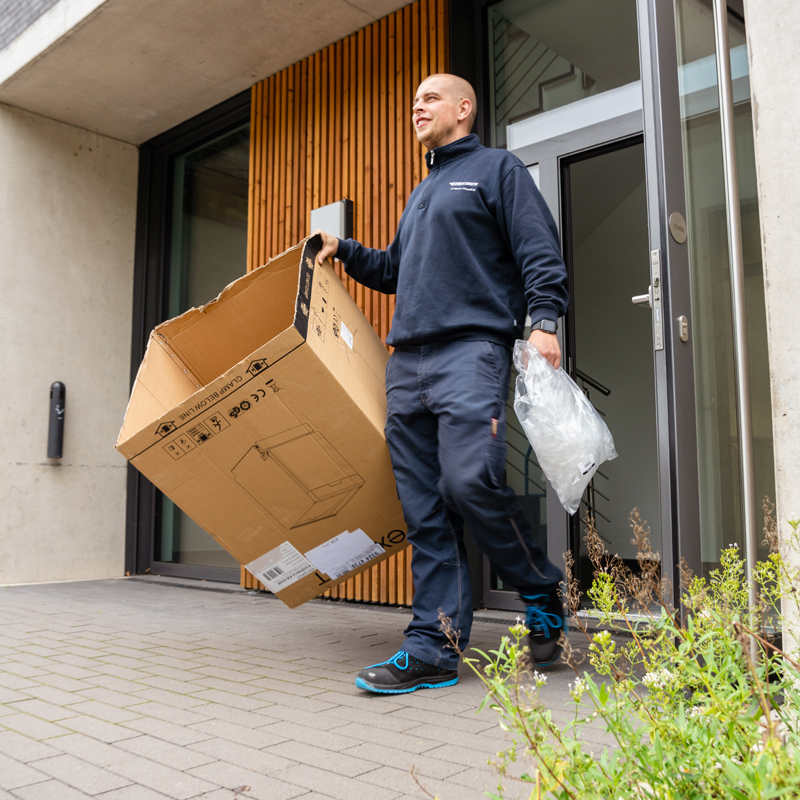
Especially for older consumers, it makes sense to offer support proactively as part of the booked service rather than waiting for customers to ask for help. Many people may be reluctant to request assistance, whether due to hesitation, uncertainty, a lack of knowledge about the services included or concerns about being a burden. This makes it all the more valuable for the 2-man handling team to clearly explain upon arrival which services are included in the order, such as connecting the appliance, taking away the packaging materials or disposing of the old appliance. This creates confidence and trust.
At the same time, small additional gestures that do not incur extra charges and can be carried out with minimal effort can have a particularly positive impact, such as slightly repositioning a piece of furniture or adjusting the position of a TV. Such gestures can significantly increase customer satisfaction because they demonstrate that the delivery is understood as a comprehensive service.
However, this approach cannot simply be improvised on site. It needs to be part of the company culture. What matters is that operational teams know what to look out for, understand the specific needs of older customers and know how to provide assistance in a professional and efficient manner.
Conclusion: A Niche Service? Accessible Delivery Is a Mark of Quality
Last-mile requirements are changing. Accessible delivery services are becoming a future-ready standard that can influence brand trust and customer recommendations. HES places particular emphasis on high customer satisfaction. That is why 2-man handling teams receive targeted training and preparation, both in technical expertise and in supporting customers for whom a successful delivery and the commissioning of new appliances cannot be taken for granted.
Accessible delivery means designing the entire service process so that everyone involved feels safe, well informed and treated with respect. This transforms a simple handover into a positive start with the new product, based on consideration for the customer’s individual needs. For many older customers, this makes an important contribution to maintaining independence, while giving providers a strong opportunity to differentiate themselves through the service experience.