Today, TVs combine sophisticated technology with stylish design. As they increasingly serve as central entertainment hubs and connected smart devices, delivery requirements are also growing. Naturally, customers expect their TV to arrive at home undamaged, but ideally, they also want it delivered directly to the desired location, connected and ready to use at the touch of a button. In practice, this is only possible when logistics, service and technology work seamlessly together. For retailers, brand manufacturers and logistics providers, this raises a key question: How can a stress-free TV delivery be ensured, from the warehouse to the living room?
What Makes TV Delivery So Challenging
Although the slim design of many TVs has reduced their overall depth, increasing screen sizes and greater sensitivity make storage, transportation and handling significantly more demanding. TVs measuring 65 inches or more cannot simply be loaded into a car or carried unsecured up several flights of stairs. Many TVs come in oversized packaging, are difficult to grip and must not be laid flat or tilted excessively. Safe TV delivery therefore begins with proper storage. The appliances must be stored upright and protected against vibrations. The packaging must remain undamaged, as even minor impacts can result in panel damage or pixel defects.
The subsequent transportation also requires careful planning. In addition to route optimisation, vehicle equipment and loading techniques play a crucial role. Ideally, the load should be secured using suitable restraint systems and pressure-distributing materials.
Order picking must also be adapted to TV-specific handling requirements. Warehouse areas should be organised so that large, delicate appliances can be accessed efficiently and with minimal risk. Poorly organised storage areas or narrow passageways increase the risk of damage even before the delivery begins.
Other Typical Challenges in TV Delivery Services Include:
- Sensitive glass surfaces and slim housings that can be damaged by pressure or impact
- Weight differences in premium models, for example OLED or QLED panels with glass components
- Packaging dimensions that make carrying TVs through narrow staircases more difficult
- Technical requirements for commissioning, including connection, channel scanning, Wi-Fi connection and, if required, wall mounting
What may initially seem like just a logical final step in the sales process is actually a crucial moment for customer satisfaction and, in many cases, customer loyalty.
Customers Buy Experiences, Not Boxes
Today, the requirements for TV delivery go far beyond simply transporting the product: customers expect the TV to be delivered to the desired location, professionally set up, connected and ready to use.
A recent HES study shows just how strongly these expectations are already influencing purchasing behaviour: More than a quarter of respondents (27 percent) said they would abandon a purchase or switch providers if delivery to the desired location was not offered. This means that the product is delivered directly to the intended location within the customer’s home.
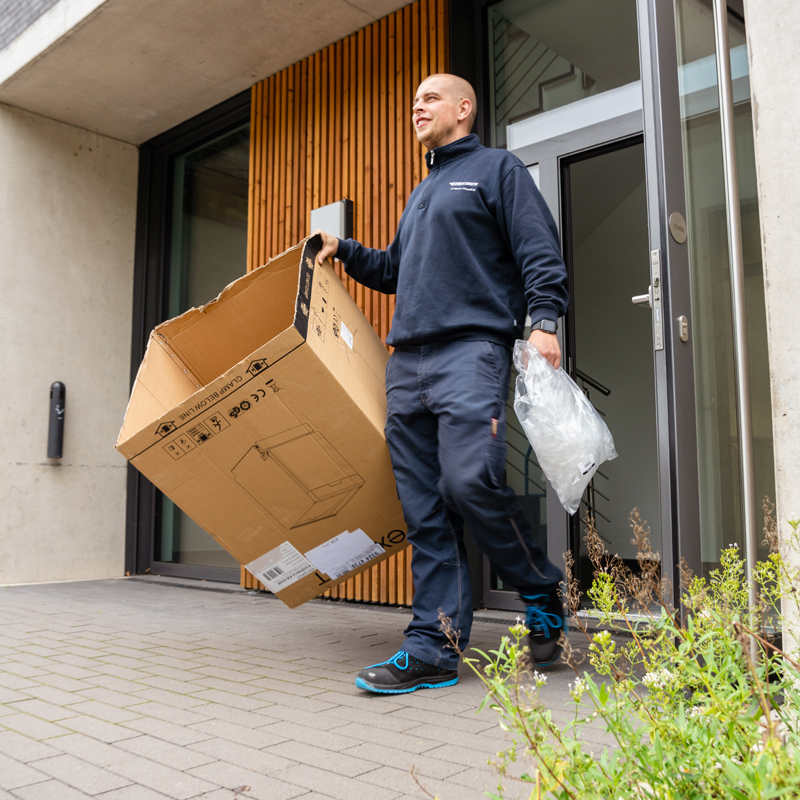
This delivery option also allows customers to book frequently requested additional services, such as connection and installation, disposal of packaging materials or old appliance removal. The demand for a comprehensive end-to-end service is therefore no longer a luxury, but a clearly expressed customer need.
Convenience is the key factor: According to the study, almost all respondents (96 percent) cite convenience as the main reason for choosing delivery to the desired location. 85 percent want to avoid the physical effort of carrying the goods, while 75 percent appreciate not having to organise transportation themselves. Around three quarters of respondents (73 percent) are also interested in additional services that can be provided directly on site as part of delivery to the desired location.
Key Customer Requirements Include:
To ensure that TV deliveries run smoothly and on schedule, everyone involved needs access to reliable information. The exchange of information between sales, warehouse and dispatch forms the basis for realistic route and resource planning. If relevant data is missing or captured too late, the risk of delays increases significantly. The more clearly questions such as “Which floor is the apartment on?”, “Do any connections need to be set up?” or “Which additional services are required?” are answered in advance, the more smoothly the comprehensive service can be carried out on site, without improvisation or unnecessary inconvenience for end customers.
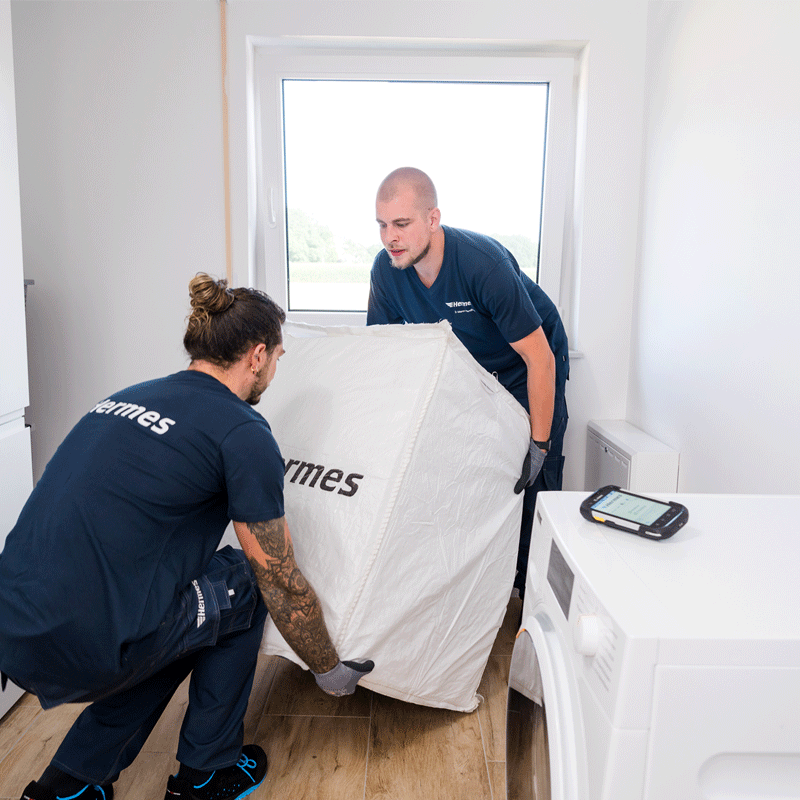
Especially when it comes to sensitive, high-value TVs, every detail matters. The final steps at the desired location are often handled by trained and experienced 2-man handling teams. When navigating staircases with a large TV, it quickly becomes clear just how important experience and effective teamwork are. The 2-man handling team is therefore responsible for more than simply carrying the product. It represents the entire company when interacting with end customers. This requires a broad range of skills:
- Technical expertise in TVs, connections, mounting solutions and set-up,
- Careful handling of delicate surfaces and high-quality displays,
- An understanding of data protection when connecting networks or setting up accounts,
- Friendly, calm communication, even in stressful situations,
- Knowledge of safety requirements when positioning or mounting equipment,
- A solution-oriented approach to questions or unexpected challenges.
For many customers, the last impression on site shapes their overall perception of the product. The quality of the service team therefore has a direct impact on how the brand is remembered.
Conclusion: Delivery to the Desired Location as a Defining Moment in the TV Customer Experience
Especially for online purchases, the delivery of a TV is the first physical interaction with the product and therefore a decisive moment for customer satisfaction. Providers that plan every step seamlessly, from the warehouse through to handing over the TV ready for use, create efficient processes and a tangible service experience.
The findings of the HES study highlight just how strongly convenience and additional services influence purchasing behaviour. Many customers now expect a comprehensive purchasing experience that requires as little effort on their part as possible. In particular, professional 2-man handling with delivery to the desired location has become a key differentiating factor. Providers that take this final step into account strengthen both their operational quality and their position in the market.