A sideboard, three metres of cardboard, plastic wrapping and edge protectors. Once the furniture has been assembled, everything is in place and the room is ready to use, if it weren’t for the pile of packaging left in the hallway. For many end customers, this is where the challenge begins: What to do with all the material? How should it be disposed of? And when? This moment is the final direct touchpoint between the brand and the customer and can influence whether the purchase is perceived as a seamless experience or an incomplete one. Packaging is the most visible remnant of the entire supply chain, making it an important factor in brand perception.
Why Packaging Take-Back Is More Than Just Disposal
Packaging protects products and conveys a sense of quality and care. But once the product has been assembled and installed, perceptions change: what once provided protection becomes a burden. This creates a tension between the product promise and the service experience. An HES study shows that 60 percent of furniture buyers would have booked a packaging disposal service if it had been offered. This reflects a clear need for convenience and a fully completed service experience. For brands, this means:
- Service is evaluated as a whole. Customers do not distinguish between the product, delivery and disposal.
- Convenience matters more than communication. Practical implementation is more convincing than words. Without it, sustainability messages lose their impact.
- The final impression matters. Packaging that is left behind is also what customers remember.
Putting it into practice: two scenarios
Scenario 1: A washing machine is delivered and connected. The protective packaging used for transportation is left behind. The customer has to store cardboard and polystyrene, organise a trip to a recycling centre and make space for the materials. The purchase may have been premium, but the experience ends with additional effort.
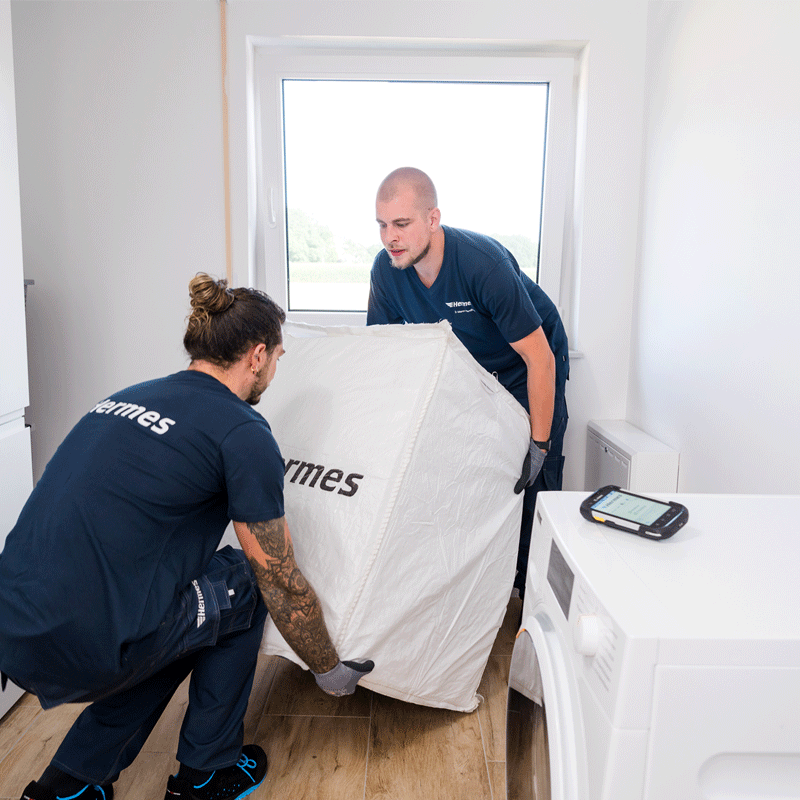
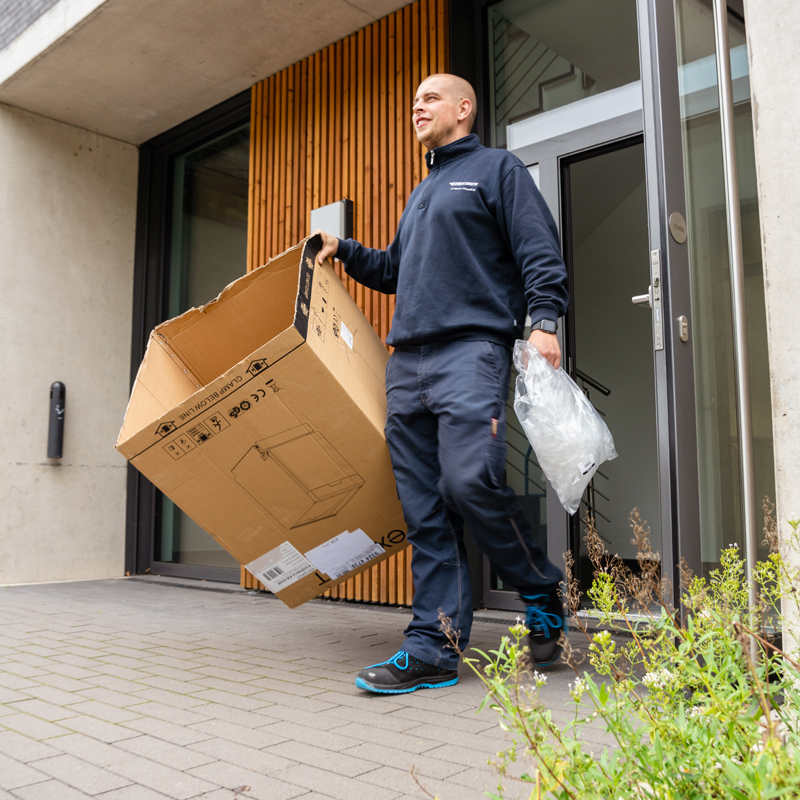
Scenario 2: The same product, the same price. After installation, the 2-man handling team separates and stores the packaging materials and takes everything away. The room can be used immediately and the process is complete. Customers experience the service as consistent and high-quality.
The difference therefore lies not in the product itself, but in how the delivery is completed. Packaging take-back creates a sense of reliability: someone takes care of everything right through to the end.
The Operational Reality Behind the Service Promise
The disposal of packaging materials does not happen automatically. Cardboard is bulky, plastic film takes up space and polystyrene requires careful handling. In a fully loaded vehicle, these materials compete for space with returns, old appliances and tools. There are also operational considerations: How should the materials be secured in the vehicle? How can scheduled delivery and installation times be reliably maintained? Where are the materials processed at the depot?
In day-to-day operations, time schedules cannot simply be extended indefinitely. Packaging disposal can therefore only be provided reliably if it is planned from the outset. It affects route planning, vehicle capacity and processes at the depot. If packaging is simply added to existing processes at a later stage, bottlenecks can arise. However, when systematically integrated into operational processes, it remains manageable.
For retailers and manufacturers, this is precisely what matters: service quality must be more than a promise. It must also work in practice.
Transparency Creates Confidence
The figures from the HES study indicate that many consumers are unaware that they can add packaging disposal to their delivery because the service was never offered to them. A common break in the customer journey is therefore caused less by the lack of packaging take-back itself and more by unclear expectations.
If customers do not know whether the transport packaging will be taken away, they either have to make their own arrangements or are disappointed when the delivery does not meet their expectations. Transparency is therefore a key factor in delivering a successful customer experience.
Digital solutions can help manage these expectations. When services are clearly specified from the moment an order is created and information is communicated consistently, this reduces questions and misunderstandings. Solutions such as myHES or the Hermine chat and voicebot ensure that end customers know what to expect.
Sustainability Beyond Unpacking
Transparency creates clarity around available services, but packaging take-back has another dimension: it makes sustainability tangible. Companies that systematically take back packaging assume responsibility beyond the actual moment of delivery. Sustainability becomes visible through practical implementation along the final stages of the supply chain.
In practical terms, this means:
- Proper separation of materials on site instead of mixed disposal by end customers.
- Targeted return of materials to established recycling systems with clearly defined disposal routes.
- Reduction of incorrectly sorted waste and residual waste, particularly for composite materials.
- Improved traceability of material flows, for example for internal sustainability reporting.
Looking ahead to future requirements such as the Digital Product Passport, this approach is becoming increasingly important. Packaging is then no longer simply waste, but part of the product’s history, including information about its origin and further recycling.
Companies that already manage packaging disposal in a structured way today are better prepared for future requirements with a service process that is consistently thought through from start to finish.
The Business Perspective on the Final Step
Taking back packaging requires resources. Time, vehicle capacity and handling need to be planned in advance. At the same time, packaging take-back reduces friction at the end of the customer journey. Many service enquiries are not caused by product defects, but by unanswered questions and unmet expectations after delivery.
Customer reviews are also significantly more positive when assembly and installation have been completed correctly and any remaining packaging materials are subsequently disposed of. A fully completed service process increases the likelihood that customers will remember a provider as reliable.
For manufacturers and retailers, packaging take-back is therefore more than just a detail. It is a manageable component of service quality. Its impact may be subtle, but it is long-lasting and contributes to something every brand needs: trust. And that trust remains long after the cardboard is gone.
Conclusion: Service Does Not End with the Product
Packaging take-back is not a major innovation project. But it is a clear indicator of quality. The point at which the purchasing and delivery process ends reveals how seriously a provider takes its commitment to service.
Taking back packaging materials means assuming responsibility in a way that is practical, visible and transparent. At HES, packaging take-back is therefore offered as part of 2-man handling, ensuring a consistent and fully completed delivery experience.