Why E-Mobility in Logistics Is Gaining Momentum
According to the German Federal Motor Transport Authority (KBA), sales of battery-electric passenger cars in Germany increased by 43.2 percent in 2025, reaching 558,165 vehicles. Electrification in the heavy commercial vehicle segment, however, is progressing much more slowly, with battery-electric drivetrains still representing only a small share of the market. This discrepancy highlights a key reality: passenger vehicles are electrifying much faster than logistics and transportation. But that is beginning to change. Three factors are driving this development.
1. Regulatory Pressure Is Increasing
According to the European Commission, newly registered trucks must emit 45 percent less CO₂ on average by 2030 compared to 2019 levels. At the same time, the toll exemption for zero-emission trucks has been extended until mid-2031. For logistics providers operating predictable routes, this creates a measurable and calculable competitive advantage.
2. Vehicle Ranges Have Reached Practical Levels
Current models such as the Mercedes eActros 600 and the MAN eTGX can achieve ranges of up to 500 kilometres. Medium-duty vehicles used in regional distribution operations typically reach between 250 and 350 kilometres. For urban applications with daily distances of up to 200 kilometres, electric drivetrains are no longer a compromise solution.
3. Economic Viability Is Becoming Tangible
A Sennder study published in 2025 shows that Germany is currently the only major European market where electric trucks are already economically competitive today. By 2030, the total cost of ownership for electric trucks is expected to be on par with conventional trucks in many markets, with cost-saving potential emerging in several segments.
Operational Reality: Where Charging Infrastructure Makes the Difference
Range is one thing. Available charging capacity is another. This is where the greatest gap between technological progress and operational implementation becomes evident.
According to the German Federal Ministry for the Environment, nearly 100,000 electric commercial vehicles are currently registered in Germany. The number of electrically powered trucks has more than tripled. However, charging infrastructure continues to lag behind.
To address this challenge, the German Federal Ministry for Transport (BMV) has developed a master plan containing 41 measures designed to accelerate infrastructure expansion both qualitatively and quantitatively through 2030. Along the core TEN-T network (Trans-European Transport Network), charging facilities for heavy commercial vehicles are expected to be available at intervals of approximately 60 kilometres. Broader requirements apply to the comprehensive TEN-T network, including intervals of around 100 kilometres, with full coverage planned by 2030.
While this sounds like significant progress, implementation remains slow in practice. Many logistics providers are therefore building their own depot-based charging infrastructure because public charging networks are either not yet available or not sufficiently powerful.
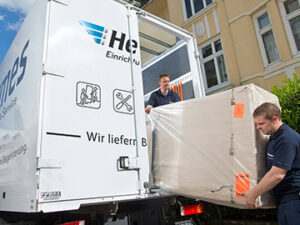
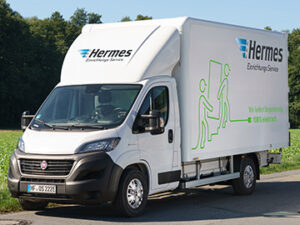
Hermes Einrichtungs Service has already taken this step. With more than 200 charging points and the use of certified green electricity, 72 of Germany’s 80 largest cities can already be served entirely by electric vehicles. This corresponds to a potential reduction of up to 2,830 tonnes of CO₂ per year.
At the Berlin site, 24 AC charging points with capacities of up to 22 kilowatts per charging point have been in operation since June 2024. The biggest challenge was connecting the site to the power grid. A completely new connection had to be installed by the network operator, and the planning phase alone lasted twelve months.
This operational experience clearly demonstrates that electrification requires not only the appropriate vehicles but also a strategic infrastructure plan.
Rethinking Route Planning: Charging as Part of the Process
Electric commercial vehicles require an entirely new approach to route planning. Unlike diesel operations, where refuelling takes only a few minutes, charging becomes an integral part of logistics processes. Digital planning is therefore essential.
Without precise route optimisation that considers vehicle weight, terrain, weather conditions, and charging locations, electrification remains inefficient. The biggest mistake is treating electric trucks like diesel trucks with batteries, without recognising how fundamentally electrification changes the entire logistics operation.
This challenge becomes even more pronounced in large-item logistics. Installing a fitted kitchen on the fourth floor requires time for assembly and installation. These stops can potentially be utilised for charging, provided the necessary infrastructure is available and routes are planned accordingly.
So-called opportunity charging – charging during operational stops – provides greater flexibility in managing vehicle range. In practice, however, this means every route must be carefully calculated in advance. Charging times cannot jeopardise scheduled appointments. Digital planning systems are therefore indispensable. Companies operating electric commercial vehicles without digital route planning risk bottlenecks, missed time slots, and dissatisfied customers.
E-Mobility in Logistics: Opportunities and Challenges
Beyond regulatory requirements, electrification offers significant strategic advantages. Companies that adopt early can gain a competitive edge in a market undergoing fundamental transformation:
- Attractive Working Conditions: Electric vehicles are quieter, generate fewer vibrations, and reduce driver fatigue. Integrating charging periods into mandatory rest breaks makes the profession more predictable. Particularly in large-item logistics, where physical demands are already high, this can become a valuable recruitment advantage.
- Access to Urban Areas: Environmental zones and access restrictions are likely to increase in the coming years. Companies operating electric fleets can secure access to city centres and environmentally sensitive areas.
- Enhanced Brand Image and Customer Expectations: Shippers and end customers increasingly expect sustainable supply chains. Electric fleets are becoming a visible demonstration of decarbonisation strategies and environmental responsibility.
However, these opportunities are accompanied by structural challenges and obstacles that continue to slow market adoption:
- Grid Connections: Grid connections can take months or even years. Sites require permits, and transformers must be properly dimensioned. Companies starting projects today are effectively planning for the future. Faster approval processes are essential to ensure infrastructure development keeps pace with vehicle availability.
- Acceptance and New Skill Requirements: The transition requires expertise in energy management, charging strategies, and range forecasting. Drivers need training, and operational processes must be adapted. This places additional demands on an industry already struggling with labour shortages.
Conclusion: Electrification Is No Longer a Question of “If,” but “How”
The electrification of logistics is no longer a technical challenge. The vehicles are available, ranges are suitable for daily operations, and economic viability has already been achieved in many segments. The real challenges lie in infrastructure and operational implementation. Companies that wait until all framework conditions are perfect will lose valuable time. Those that start now will gain practical experience – experience that will become decisive as market adoption accelerates.
At Hermes Einrichtungs Service, electric vehicles are deployed where they make operational sense: in urban delivery areas, on predictable routes, and supported by dedicated charging infrastructure. Electrification is not an end in itself but a strategic step toward decarbonisation, balancing environmental objectives with operational feasibility and economic efficiency. The decisive factor will be how quickly the industry manages the transition and how effectively companies build the operational expertise required for an electric future.