The last mile in bulky goods shipping is anything but a standard task. Where parcel delivery services reach their logistical or physical limits, 2-man handling comes into play. When delivering large household appliances, furniture or consumer electronics, complexity is determined not only by transport volume and weight. The situation on site can also present challenges for a seamless delivery process, including narrow staircases, buildings without lifts, delicate surfaces and built-in old appliances. We explain what matters for a well-organised 2-man handling process and which key factors ensure safe, reliable and customer-focused delivery.
Why Precise Planning and Systematic Processes Are Essential in 2-Man Handling
Unlike traditional parcel delivery, 2-man handling is not an automated mass process. Instead, it is a highly individualised service that combines physical demands, situational flexibility and a strong focus on customer service. Delivering a washing machine to the ground floor of a detached house involves very different requirements from delivering a side-by-side refrigerator to the fourth floor of a building without a lift.
It is therefore all the more important to establish clear process standards to ensure that delivery time slots are met while maintaining quality, safety and transparency. A professional 2-man handling process involves much more than simply transporting goods from A to B. It includes the following elements:
- Precise advance planning, or example through delivery checks covering access conditions, floors, appliance type or old appliance removal when purchasing a new appliance
- Optimised route planning with intelligent capacity allocation, regional consolidation and time slot management
- Specialised teams that receive regular training and work according to consistent service and safety standards
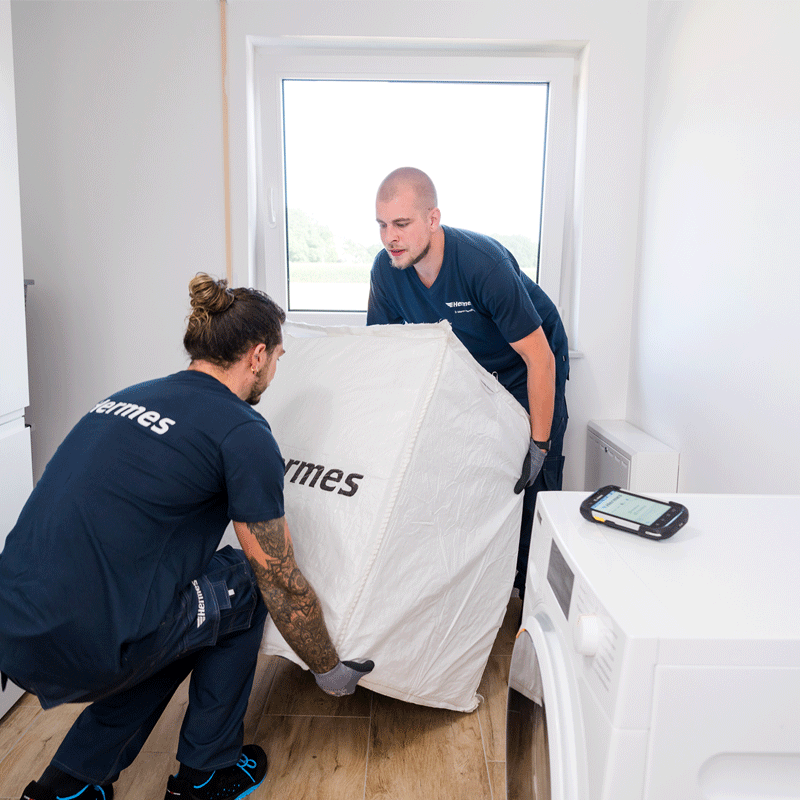
- Safe carrying, loading and, where required, unpacking including protective measures for floors, walls and appliances
- Comprehensive documentationto transparently record delivery, removal services, any special circumstances or damage
Was dabei zählt, ist die Systematik hinter dem Einsatz. Denn erst ein klar definierter Ablauf im 2-Mann-Handling stellt sicher, dass Prozesse bei hoher Volumenbelastung skalierbar und reproduzierbar bleiben – etwa während Peak Seasons oder bei der Ausweitung von Services wie Montage oder Altgeräteentsorgung. Gerade beim Transport schwerer Lasten schafft ein strukturierter Plan die Voraussetzung dafür, dass Masse kontrolliert und nicht improvisiert bewegt wird.
Success Factor 1: Data-Driven Preparation
What matters here is the systematic approach behind the process. Only a clearly defined 2-man handling process ensures that operations remain scalable and reproducible even during periods of high shipping volumes, such as peak seasons or when expanding services such as assembly or old appliance disposal. Particularly when moving heavy loads, a structured approach ensures that weight and volume are handled in a controlled manner rather than through improvisation.
- Is there a lift available to transport heavy appliances to higher floors?
- Do doors need to be removed or walkways protected?
- Has the old appliance been disconnected and is it ready for collection?
Particularly with sensitive electronics or large electrical appliances such as washing machines with tumble dryers stacked on top, a seamless 2-man handling process is only possible when all requirements and conditions are clearly defined in advance. Underestimating this step can lead to delays, additional costs or, in the worst case, incomplete deliveries and dissatisfied customers.
Success Factor 2: Safety for People, Goods and the Home Environment
Safe handling of bulky goods requires more than physical fitness and strength. The delivery teams need to know how to protect themselves, the products being transported and the customer’s surroundings from damage. For example, goods with uneven weight distribution, such as heat pump tumble dryers with heavy concrete bases or TVs with a sensitive centre of gravity towards the front, can be damaged if lifted incorrectly and may even pose a risk of falling.
Moving heavy appliances in confined spaces therefore always involves physical, material and legal risks.
To ensure safe processes, it is helpful to
- choose the right lifting, carrying and turning techniques
- use suitable equipment such as dollies, stair climbers or lifting straps </strong
- bring protective materials such as edge protectors, floor protection and blankets
- und and follow ergonomic and safety-related standards
The 2-man handling teams must also receive regular training, particularly in handling new appliance types, materials or structural challenges, in order to prevent damage, repeat visits and unnecessary complaints.
In addition, each team should have access to at least one flexible carrying system, such as stair-climbing trolleys with safety mechanisms or rotating transport platforms, to ensure that heavy goods can be moved safely and in a controlled manner even in buildings without barrier-free access.
A well-structured 2-man handling process therefore defines both the individual delivery steps and the required quality and safety measures in a way that is binding, transparent and measurable.
Success Factor 3: Transparency and Quality Assurance
The final metre is the most visible part of the entire supply chain and, for many end customers, the only direct contact with a logistics provider. This makes it all the more important that every step is documented, quality-assured and traceable. The 2-man handling team therefore records the arrival time, the condition of the delivered goods, any old appliances taken away, as well as any special circumstances or restrictions on site.
This data is transferred to central systems and can be accessed by dispatch and customer service teams. This allows questions to be resolved quickly and service quality to be improved, which is particularly important in the event of complaints. The information can also be used to derive KPIs and benchmarks, for example for punctuality, damage rates or first-time delivery success rates. In this way, day-to-day operations become a strategic management tool.
Conclusion: 2-Man Handling: The Process Determines Efficiency and Customer Experience
2-man handling is a last-mile service and a complex, brand-defining process with a direct impact on efficiency, brand perception and the customer experience. Whether large household appliances, TV systems or furniture, only a precisely planned and standardised process ensures that goods arrive safely and on time at the desired location. Even heavy products weighing around 70 kilograms or more, such as solid wood sideboards or fridge-freezers, can be transported reliably without unnecessary effort, delays or transport damage.
Logistics providers such as HES that take a structured and holistic approach to the 2-man handling process, from carefully planned coordination through to professional execution on site, enable the seamless and resource-efficient delivery of heavy or bulky goods. This increases customer satisfaction and ultimately strengthens trust in the brand.