According to the ADFC, around 2.05 million e-bikes were sold in Germany in 2024, accounting for more than half of all bicycle sales. But as demand increases, so do the requirements for delivery, handover and commissioning. While bicycles were once simply handed over at the customer’s doorstep, today battery checks, functional checks and digital set-up are increasingly important. So how can e-bikes be handed over safely and professionally, ensuring that end customers are ready to ride straight away?
Why E-Bikes Require Special Handling
Electric bicycles, more commonly known as e-bikes, are complex technical systems. A lithium-ion battery with a capacity of up to 750 watt-hours, an electric motor, digital control units and often app connectivity make them sophisticated products. They weigh an average of around 25 kilograms, while premium models with full suspension or cargo configurations can weigh 30 kilograms or more. By comparison, a conventional bicycle weighs an average of 16 kilograms.
The technical complexity of e-bikes, whether pedelecs (up to 25 km/h) or S-pedelecs (up to 45 km/h), places new demands on logistics. Unlike conventional bicycles, simply delivering and dropping off the product is not enough. The battery needs to be checked, functionality tested and the initial set-up explained. Many electric bicycles are only around 80 percent pre-assembled when they leave the factory, meaning that the handlebars, pedals and front wheel may need to be fitted on site. There are also digital services to consider: some manufacturers offer apps for route planning, theft protection or performance adjustment. Without an initial set-up, customers cannot take full advantage of the product’s capabilities.
For retailers, this means that delivery becomes a key service moment. Retailers selling e-bikes and aiming to provide a convincing customer experience should ensure that the bikes are handed over ready to ride, both physically intact and technically ready for use.
Battery Safety: What Matters During Transportation
The lithium-ion battery is at the heart of every e-bike and, at the same time, its most sensitive component. Batteries are sensitive to shocks, extreme temperatures and mechanical damage. Clear safety requirements therefore apply during transportation to protect the battery and minimise the risk of fire.
- Removing the battery is standard practice : During delivery, the battery should generally be transported separately. This reduces the weight of the e-bike during handling and protects the contacts from damage. Professional transportation by logistics providers is also subject to additional packaging and labelling requirements.
- Check the battery charge level : During transportation, batteries should have a charge level of between 30 and 60 percent, which is the optimal range for storage and transportation. A fully discharged or fully charged battery can affect its service life.
- Damaged batteries must not be used or transported: Visible deformation, cracks in the housing or unusual heat generation are warning signs. When taking over the e-bike from the manufacturer or retailer, the battery should be visually inspected before transportation.
- Consider fire safety:Lithium-ion batteries are classified as Class 9 dangerous goods. For commercial transportation, fire-resistant transport containers or special protective bags are therefore recommended. For logistics providers that regularly deliver e-bikes, this is part of the standard operational equipment.
On-Site Assembly: What Matters During Set-Up
Many e-bikes are delivered partially assembled to prevent transport damage and reduce shipping volume. This means that the handlebars, front wheel and pedals often need to be fitted on site. While this may sound simple, mistakes can easily occur when assembly is carried out under time pressure or without the right tools.
The handlebars must not only be securely fastened but also precisely aligned. Incorrect alignment can affect steering and may cause accidents. The brakes and gears also need to be checked. Cables can loosen or brakes can become misaligned during transportation. A functional check should therefore be carried out before handover: Are the brakes working properly? Are the gears shifting smoothly? A short test ride immediately shows whether everything is working correctly.
E-bikes often have wider tyres with higher air pressure than conventional bicycles. The recommended pressure is indicated on the tyre sidewall and should also be checked before handover. Insufficient tyre pressure can affect handling and range. Once assembly is complete, the battery is inserted and the system is switched on. Does the display show any error messages? Does the motor respond to pedal assistance?
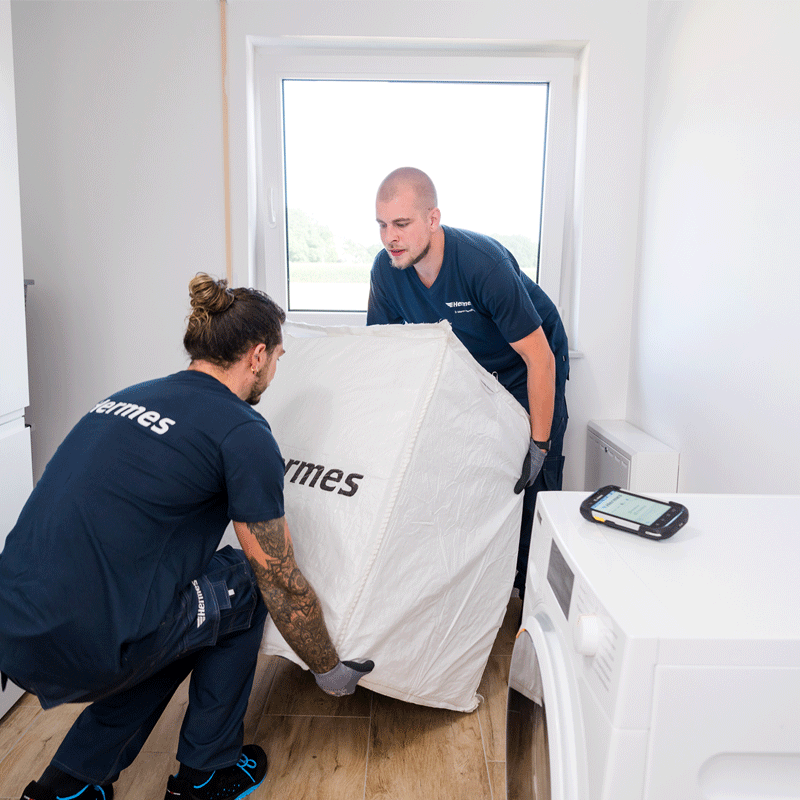
To ensure that end customers are not left with a faulty system, 2-man handling with technical expertise is essential. E-bike delivery requires the ability to assemble, check and test the bike. Transportation alone is usually not enough.
Handover as a Mark of Quality
Customers want one thing: to get on their e-bike and start riding straight away. The handover of an e-bike therefore also marks the beginning of the customer experience. This is the moment when it becomes clear whether the product promise is being fulfilled. An e-bike that is handed over ready to ride, fully checked and properly explained builds trust. An e-bike delivered with an empty battery, loose screws or without proper instructions, on the other hand, can lead to frustration, regardless of the product quality.
Choosing the right logistics provider is therefore crucial for retailers and manufacturers. The expertise of the delivery team has a direct impact on customer satisfaction and, in turn, on reviews, complaints and repeat purchases. The Hermes Furniture Delivery Service (HES) offers 2-man handling with technical training for e-bike deliveries.
The teams…
- fit and align the handlebars,
- fit the pedals,
- adjust the saddle height,
- check the fork bolts and front wheel attachment,
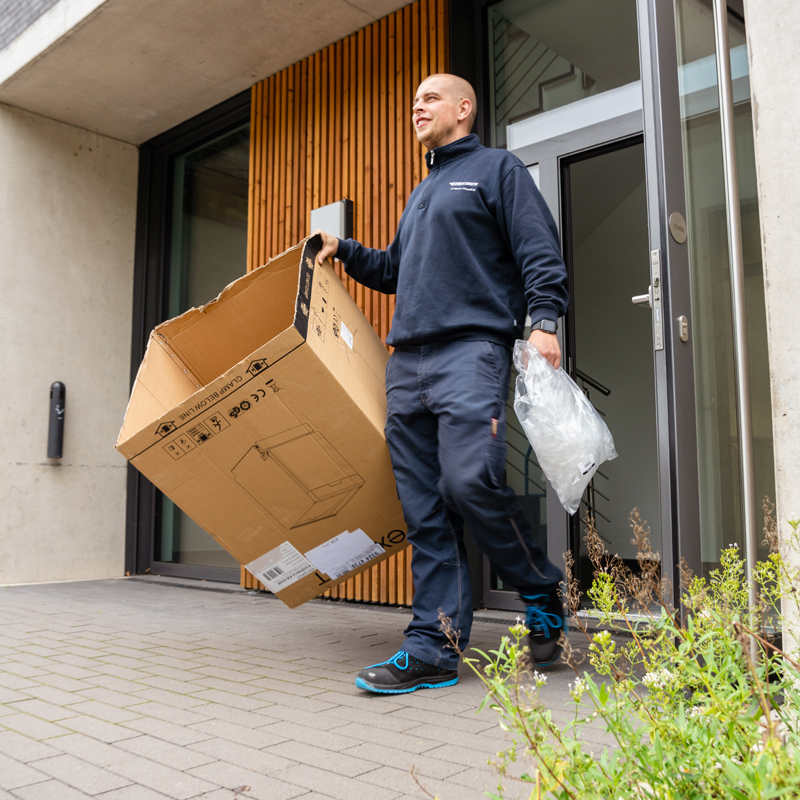
- and, if required, take away the packaging materials.
Conclusion: Technology Requires Expertise, Even on the Last Mile
E-bikes are technical products that require specialised delivery expertise. Battery safety and assembly expertise are essential for a professional handover. The last mile determines whether a high-quality product becomes a convincing customer experience or starts with frustration. Retailers and manufacturers that rely on specialised logistics providers create the right conditions for end customers to get on their e-bike and start riding straight away.