Washing Machine Installation as Part of the Product Experience
The delivery is complete and the appliance is in place, but the crucial moment is yet to come: the first press of a button, the first hum, the first cooling cycle. Whether it is a washing machine or a refrigerator, professional installation of these essential household appliances is key to ensuring they are ready for immediate use and to achieving customer satisfaction. For manufacturers and retailers, this represents an often underestimated strategic opportunity: those who not only deliver appliances but also provide professional connection and installation services can prevent errors and create additional value for their customers.
Chilled drinks, clean laundry and no dirty dishes: large household appliances are investments in convenience, efficiency and quality of life for consumers. Particularly when it comes to washing machines and refrigerators, expectations are clear: they should be ready for immediate use, operate reliably and continue to work without problems for as long as possible. These expectations can only be met if the appliance is correctly connected and adjusted and, in the case of refrigerators, positioned in a suitable location.
This makes one thing clear: Installation is not a minor detail. Rather, it is a key part of the overall product experience. An incorrectly installed drain hose or a refrigerator that is not properly levelled can cause significant damage, not only to the appliance itself but also to the customer’s home. Any resulting frustration can quickly have a negative impact on the retailer’s brand.
Typical Mistakes When Installing Appliances Yourself
Many customers underestimate the effort and technical requirements involved in installing washing machines and refrigerators. Buying the appliance online may be quick and easy, but delivery marks a critical moment in the customer journey: commissioning the appliance.
Customers who choose to handle this step themselves face not only physical challenges, but also technical pitfalls that, in the worst case, can lead to consequential damage or malfunctions.
This repeatedly leads to the following problems:
- Water Damage: One of the most common mistakes is the improper connection of the inlet and drain hoses of washing machines. If seals are forgotten, clamps are not tightened sufficiently or hoses are kinked, leaks can occur. This can result in water damage to floors or walls, with corresponding liability risks and reputational damage for the retailer if customers confuse cause and responsibility.
- Noisy or Unstable Operation: A washing machine that is not properly levelled can quickly cause excessive noise, vibrations or even damage to the appliance or its surroundings. Another common issue is that the transit bolts are not removed. These are necessary to secure the appliance during delivery, but they prevent the drum from operating correctly. If this step is forgotten, which happens regularly, it can damage the washing machine or even result in complete failure.
- Insufficient Cooling Performance: Refrigerators also need to be positioned correctly, ideally away from direct heat sources and with sufficient ventilation. In addition, after transportation, particularly if the appliance has been transported horizontally or at an angle, it must be left to stand for several hours before being switched on so that the refrigerant can settle correctly. Ignoring this can result in reduced performance or compressor damage.
- Incorrect Electrical Connection: Connecting appliances to the power supply can also involve risks. Appliances are sometimes operated using multi-socket adapters or circuits with inadequate protection. Particularly in older buildings, the technical requirements for correct electrical protection may not always be met. This can lead to overloads, power failures or short circuits.
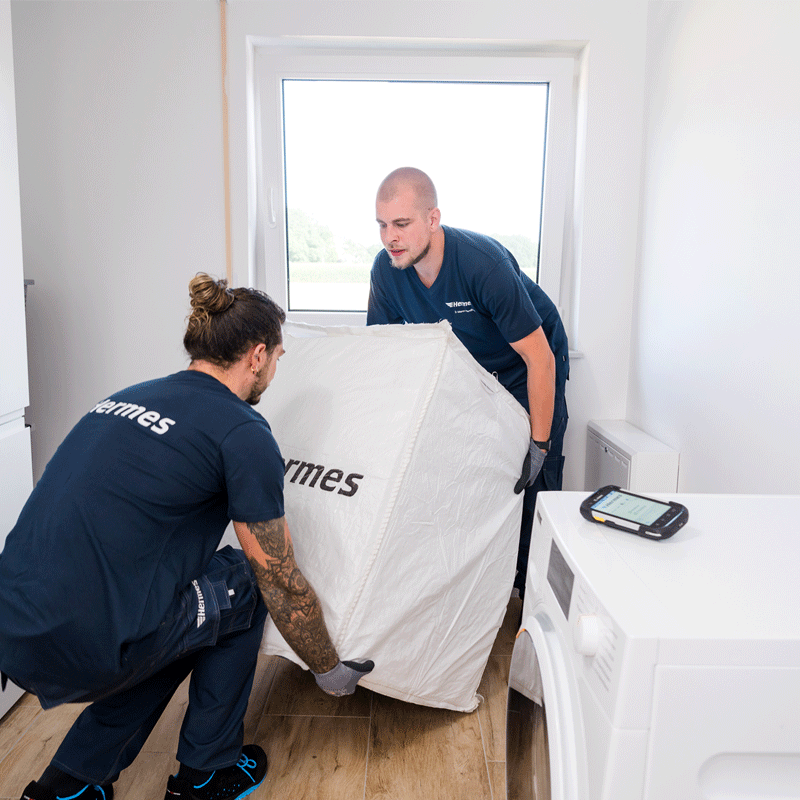
- Mechanical Damage During Carrying or Unpacking: Heavy appliances such as washing machines can be handled incorrectly by inexperienced helpers during delivery. This can cause damage to floors, walls or the appliance itself. Such damage can be avoided when trained 2-man handling teams use lifting equipment and floor protection mats.
These mistakes are not only frustrating for customers, they also result in significant follow-up costs for retailers. These range from increased customer service effort and unnecessary returns to poorer online reviews. Damage caused during installation is often attributed to the product itself and therefore indirectly to the retailer.
However, the greatest damage occurs on another level: the loss of trust. If an appliance does not work, it leaves a negative impression, regardless of its quality or how attractive the price was. In this situation, it is not the product itself that determines the customer’s perception, but the moment it is put into use. This makes installation an integral part of the brand experience.
Professional Connection and Installation: How Retailers Benefit
To prevent these problems from occurring in the first place, it is worthwhile for manufacturers and retailers to integrate professional additional services that go beyond delivery alone. Using trained specialists for assembly and installation services can proactively prevent many of the issues mentioned above. This can significantly reduce the risk of complaints and the number of unnecessary support cases after delivery.
Even more importantly, a washing machine installation service can turn a potential moment of frustration into a positive brand experience. When an appliance is ready for immediate use without customers having to deal with technical installation or transportation themselves, this creates genuine satisfaction where it matters most: in the customer’s own home.
This trust also creates commercial opportunities. Professional connection and installation can be marketed and monetised as a clearly defined additional service. By consistently investing in these services, retailers can expand their service portfolio and gain a competitive advantage.
In Summary: The Five Key Benefits of Professional Washing Machine Installation
- Unnecessary damage is prevented through professional commissioning
- Stronger customer loyalty through a seamless product experience
- Higher revenue per purchase through targeted additional services
- Reduced pressure on customer service thanks to fewer installation errors
- Positive differentiation from competitors through a strong service offering
This is also confirmed by an HES study conducted in collaboration with Cogitaris: 45 percent of buyers of large electrical appliances have already used a connection and installation service. In addition, 29 percent of those who were not offered this option would have booked it if it had been clearly presented during the ordering process. This shows that the demand is there, but it often remains unmet.
What Professional Washing Machine Installation Looks Like
A Professional Installation Service Should Ideally Include:
- Delivery to the desired location by a trained 2-man handling team
- Connection to electricity, water and wastewater, including suitable seals, hose extensions or adapters
- Levelling and adjustment of the washing machine for low-vibration operation
- On-site functional check and, if required, brief instructions on how to use the appliance
- Disposal of packaging materials and, if requested, old appliance removal
Conclusion: Washing Machine and Refrigerator Installation: An Additional Service with a Big Impact
Professional installation of household appliances such as washing machines and refrigerators is a crucial final step in turning a product purchase into a positive customer experience. This additional service reduces risks and increases the likelihood of turning a one-time purchase into a long-term customer relationship.
Retailers that invest in this area benefit in two ways: satisfied customers and stable revenues. Those who not only sell products but also deliver, install and provide support can establish themselves as trusted partners and clearly stand out from the competition. Service providers such as HES demonstrate how delivery and installation services can be efficiently integrated into existing processes, with a positive impact on both the customer journey and cost efficiency.