The FIFA World Cup kicks off in the USA, Mexico and Canada on June 11, 2026. During the weeks surrounding the tournament, many households decide to purchase a new TV. For consumer electronics retailers, this means a particularly demanding period for logistics: those who are not prepared risk delivering too late. And those who deliver too late risk losing customers to the competition.
The Pattern Repeats, Reliably
Football World Cup, European Championship, Olympic Games: Major sporting events are reliable drivers of the TV market. Figures from previous years tell a clear story. In the weeks leading up to UEFA EURO 2024, TV sales in Germany were already 13 percent higher than in the same period of the previous year.
Around three weeks before the tournament began, sales of TVs with screen sizes between 66 and 75 inches were up by as much as 63 percent, while models over 75 inches recorded a 75 percent increase compared with the same week of the previous year.
What these figures show is clear: Demand does not increase gradually, but rises sharply within just a few weeks immediately before and during the tournament. The decision to buy is often driven by emotion rather than long-term planning. Many end customers only decide to purchase a new TV once the match schedule has been published or the final warm-up match is broadcast on free-to-air TV, and they expect the new TV to arrive before the opening match.
For retailers, this presents a structural challenge. To meet demand within these tight time frames, retailers need to have their supply chains ready before end customers even know that they are going to buy a new TV.
Large-Screen TVs Are Not Standard Parcels
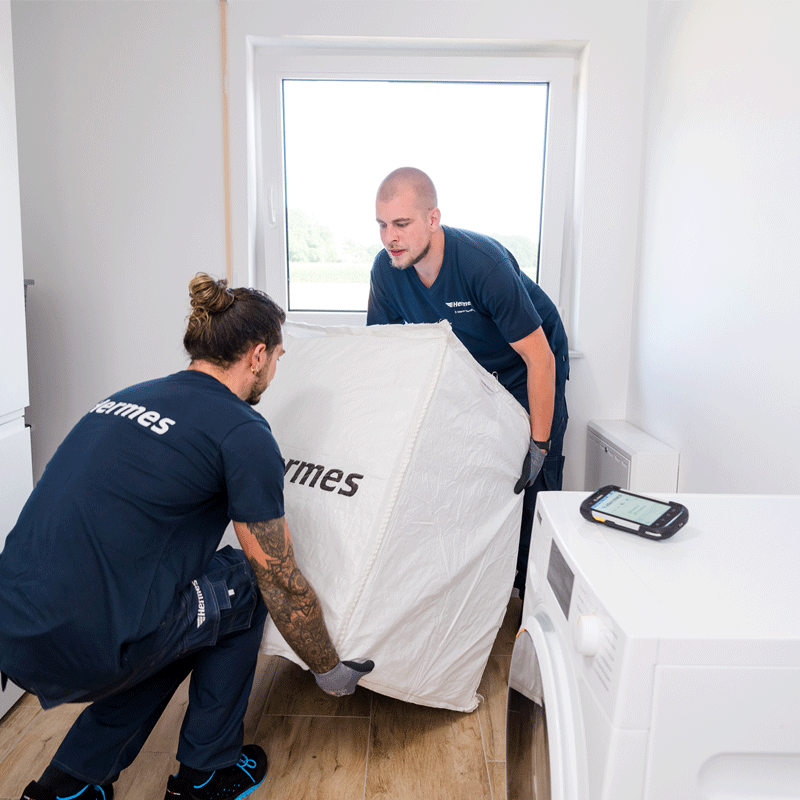
What may seem simple to consumers, ordering a TV, having it delivered and switching it on, is a demanding logistical task. A 75-inch TV is bulky, heavy and highly sensitive. It cannot be transported safely unless it is carefully secured and handled by experienced professionals.
- TV panels can be permanently damaged by vibrations or shocks, even if the damage is not visible from the outside.
- In addition, a high-quality TV should not be left curbside outside the customer’s home, where it may be exposed to weather and other external conditions.
- Only when the TV is switched on for the first time does it become clear whether it has arrived undamaged. This is a crucial moment that can determine whether the customer experience results in satisfaction or disappointment.
Ideally, the TV is delivered to the desired location, connected, configured and handed over ready for use. End customer expectations have clearly increased. Today, a fixed delivery time slot is standard. Vague information such as “delivery between 8 a.m. and 6 p.m.” can undermine trust before the TV has even left the depot. By contrast, offering a time slot of just a few hours, calling one hour before delivery and arriving on time builds confidence in the quality of the service before the packaging has even been opened.
Different service levels are required depending on the needs of the end customer. While some customers primarily expect reliable delivery to the desired location, others want additional services such as connection, set-up or wall mounting. With the modular HES Smart and HES Premium delivery models, the Hermes Furniture Delivery Service (HES) offers suitable solutions that can be flexibly expanded to meet individual requirements.
What Really Happens on the Last Mile
When transporting TVs and home entertainment systems, the real work often begins once the delivery team enters the building. Narrow staircases, upper floors without lifts and heavy packages that need to be handled with care are all part of everyday bulky goods delivery. At the same time, many customers not only expect their new TV to arrive undamaged, but also want it to be wall-mounted. Mounting a large-screen TV on the wall requires a secure bracket, the right tools and technical expertise.
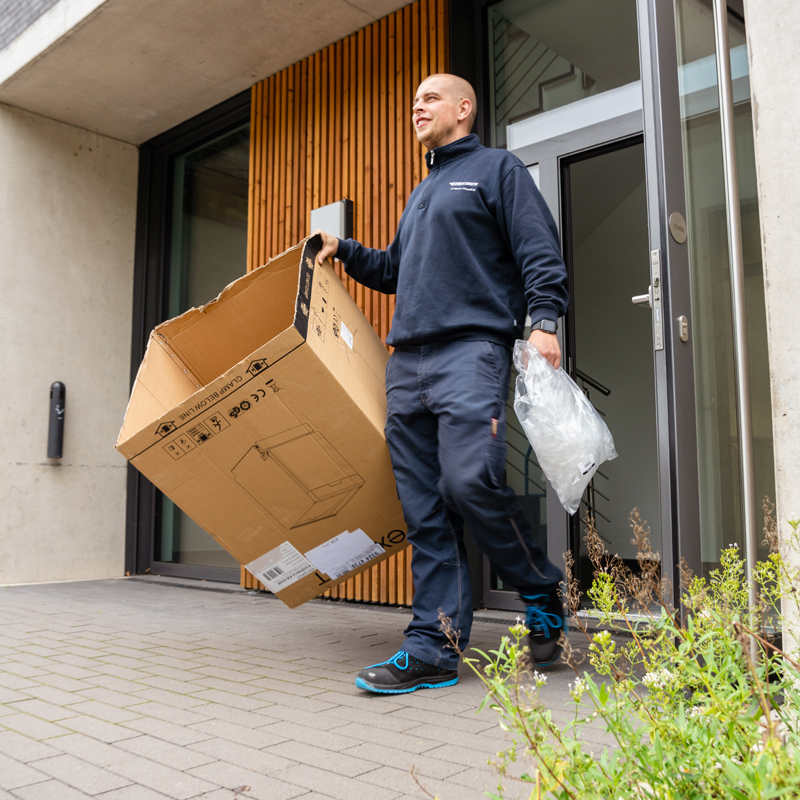
In addition, old appliance removal is an essential requirement for many customers when making a purchase. Some may even decide against buying a new TV if they do not know how to dispose of their old one. Retailers that do not offer old appliance removal therefore risk losing a relevant group of potential customers.
All of this requires 2-man handling by trained specialists who can carry and set up the TV and, upon request, provide installation services. Logistics providers that cannot offer these services automatically limit the range of products retailers can successfully ship and, ultimately, the level of customer satisfaction.
What Matters for Peak Management During the World Cup
The key factor is how those responsible manage peaks in demand. For the German market, the peak period is roughly between the beginning and middle of June. To ensure smooth operations, shipping volumes first need to be forecast based on previous-year figures, market data and the specific tournament schedule.
Once all customers start ordering at the same time, it is usually too late to build up capacity at short notice, increase capacity at depot locations or replan routes. To ensure reliable delivery, retailers need partners such as the Hermes Furniture Delivery Service that have the operational capacity to manage the peak ahead of the World Cup:
- Nationwide Depot Network With around 50 depots across Germany, HES ensures that even orders placed at short notice can be delivered on time.
- Modular Service Packages: VFrom standard 2-man handling to wall mounting and old appliance removal, the scope of services and capacities can be tailored to the retailer’s individual shipping
- Delivery Date Notification and Communication: .End customers are informed of their delivery time slot in advance, creating a service experience that builds trust even before the appliance is brought into the home.
Conclusion: Every Delay Is a Missed Opportunity
The 2026 World Cup features 104 matches over five weeks, with the opening match on 11 June and the final on 19 July. The period of intense demand for TVs is narrow. If customers experience the first week of the tournament with a damaged TV or a poorly communicated delivery, it can be difficult to reverse the negative impression of the customer journey.
HES therefore relies on professional 2-man handling and supports retailers and manufacturers with a nationwide network and comprehensive services from a single source, ensuring that the new TV is ready to use in time for kick-off.