European legislation is changing the rules of the product lifecycle. With the EcoDesign for Sustainable Products Regulation (ESPR), the EU has set the course for a mandatory Digital Product Passport (DPP), which will be gradually introduced starting in 2027. What may at first sound like more bureaucracy actually opens up strategic opportunities for retailers: creating transparency about products, making professional services visible, driving sustainability, and securing competitive advantages. Two-man handling also comes into focus, as the DPP documents what has been professionally implemented in practice.
How the Digital Product Passport Changes Logistics
The Digital Product Passport is part of the EU’s circular economy strategy and is intended to make information about origin, material composition, repairability, and sustainability of products transparent in a standardized form. It will be introduced in 2027 for initial products such as batteries or textiles, with further categories like electrical appliances and building materials to follow step by step. By 2030, the DPP will be mandatory for many more sectors and accessible via QR codes or chips.
For the furniture and electronics industries, this means: every product receives a digital twin that accompanies its entire lifecycle – from manufacturing to use, and finally to disposal or recycling.
Specifically, the DPP can include information such as:
- Technical specifications and weight details
- Material composition and proof of origin
- Handling and safety instructions
- Information on repairability and spare parts
- Details on proper disposal
This transparency builds trust among customers but also places new demands on the supply chain. Anyone documenting product information digitally must ensure that physical handling matches these details. This is where two-man handling comes into play.
Where Two-Man Handling and the DPP Intersect
The connection between digital documentation and physical service is more direct than it may seem. Whether heavy furniture or bulky fitted kitchens: for many products that will soon require a DPP, two-man handling is already standard today. Four areas show how closely digital documentation and professional delivery are intertwined:
Weight and Handling Safety
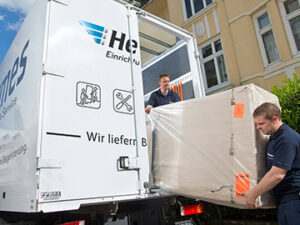
The DPP records technical data such as weight and dimensions. This information enables more precise resource planning in logistics: Which vehicles are needed? Which tools? A two-man handling team knows how to transport heavy loads professionally – for example, a 180-kilo wardrobe that needs to be carried to the fourth floor – and plans the necessary equipment accordingly. This reduces health risks, time losses, and damage to products or property. What is written in the DPP becomes the basis for safe and efficient processes.
Product Protection Through Expertise
The DPP aims to extend product lifespans by making repairability and care transparent. But even the best repair manual is useless if the product is damaged during transport. Qualified delivery teams use lifting aids and floor protection mats and know the correct carrying techniques. This reduces transport damage and unnecessary returns – a real contribution to sustainability.
Circular Economy in Practice
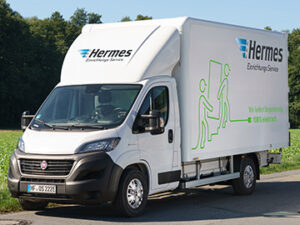
The DPP is also designed to promote the circular economy, which begins with delivery services. Two-man handling teams, such as those from Hermes Einrichtungs Service (HES), not only handle transport but also the proper removal and disposal of old appliances. What is documented in the DPP as recyclable is practically implemented by skilled personnel. This creates a closed loop: the new furniture arrives safely, while the old is properly recycled. This complete solution reduces effort for customers and ensures that materials truly re-enter the cycle.
Making Services Visible in the DPP
The Digital Product Passport also offers the opportunity to document logistics services. When was the furniture delivered? How was the washing machine installed? What warranty services exist? Retailers can use this transparency to sharpen their service profile and delight customers. Delivery by trained two-man handling teams thus becomes tangible and verifiably documented.
Why Professional Service Will Continue to Matter
Digitalization through the DPP does not replace physical expertise – it makes it indispensable. In the end, real people carry real furniture into real homes. The more transparent product information becomes, the more important proper implementation in practice will be.
A recent HES study shows that end customers place great value on complete service offerings. Half of buyers of large electrical appliances would switch providers if delivery to the point of use were not offered. In the furniture sector, the figure is still 42 percent. This means: those who forego comprehensive service risk customer satisfaction and revenue.
Even more striking: many retailers miss opportunities because they do not actively offer services. 29 percent of buyers of large electrical appliances would have gladly used an installation service if it had been clearly visible during the ordering process. The same applies to packaging disposal: 60 percent of furniture customers would have booked this option if it had been offered.
Digital Documentation Meets Implementation
The Digital Product Passport documents what should happen, but two-man handling reflects part of reality. The quality of the customer experience is revealed on the last mile, not in the QR code. It depends on trained teams that safely move heavy loads, properly assemble furniture, install electrical appliances, and provide customers with a worry-free experience.
To turn digital transparency into reliable service, logistics processes must be intelligently integrated:
- Route data, weight data, and handling requirements from the DPP flow into operational planning.
- Delivery teams receive relevant information such as pickup orders or disposal instructions digitally.
- Documents, photo evidence, and service reports can be fed directly back into the DPP system as part of a circular service record
For retailers, the DPP opens new opportunities: transparency and service become the keys to trust and differentiation. Digitalization does not replace human expertise – it makes it controllable, scalable, and visible.
Conclusion: Invest Today, Win Tomorrow
While data flows seamlessly in the Digital Product Passport, certain product categories remain difficult to handle and staircases steep. This is precisely where the potential for retailers lies: investments in two-man handling, professional assembly, and comprehensive services generate sustainable competitive advantages. Providers of large-format goods thus meet rising customer expectations and lay the foundation for long-term customer loyalty. In the end, it is not only what is written in the product passport that counts, but above all how the product arrives in the living room.