In Germany, around 2.05 million e-bikes were sold in 2024 according to the ADFC—more than half of all bicycle purchases. But as demand grows, so do the requirements for delivery, handover, and commissioning. Where a bicycle used to be handed over at the doorstep, today customers expect battery checks, functional testing, and digital setup. So how can the handover be done safely, professionally, and in a way that allows customers to ride immediately?
Why E-Bikes Come With Special Requirements
Electric bicycles—commonly known as e-bikes—are technical systems. A lithium-ion battery with up to 750 watt-hours of capacity, an electric motor, digital control units, and often app connectivity make them complex products. The average weight is around 25 kilograms; premium models with full suspension or cargo setups reach 30 kilograms or more. For comparison: a conventional bicycle weighs about 16 kilograms.
This technical complexity—whether Pedelec (up to 25 km/h) or S-Pedelec (up to 45 km/h)—sets new standards for logistics. Unlike traditional bicycles, it’s not enough to simply deliver the product and leave it. The battery must be checked, the system tested, and the setup explained. Many e-bikes leave the factory only 80 percent pre-assembled—handlebars, pedals, and the front wheel often need to be mounted on-site. Digital services add another layer: some manufacturers offer apps for route planning, theft protection, or performance adjustments. Without initial setup, the product’s full potential remains unused.
For retailers, this means: delivery becomes a service moment. Anyone selling e-bikes and aiming to impress customers must ensure they are handed over ready to ride—both physically intact and technically operational.
Battery Safety: What Matters During Transport
The lithium-ion battery is the heart of every e-bike—and also its most sensitive component. Batteries react to shocks, extreme temperatures, and mechanical damage. Clear safety guidelines apply during transport to protect the battery and minimize fire risks.
- Removing the battery is standard: During delivery, the battery should always be transported separately. This reduces the bike’s weight during handling and protects the contacts from damage. Professional logistics providers must also follow packaging and labeling regulations.
- Check the charge level: Batteries should be transported with a charge level between 30 and 60 percent—this is the optimal range for storage and transport. Fully discharged or fully charged batteries can suffer reduced lifespan.
- Damaged batteries must not be used or transported: Visible deformation, cracks in the casing, or unusual heat development are warning signs. When receiving the battery from the manufacturer or retailer, a visual inspection should be performed before it goes on tour.
- Consider fire protection: Lithium-ion batteries are classified as Class 9 hazardous materials. For commercial transport, fireproof containers or protective bags are recommended. For logistics providers delivering e-bikes regularly, this is part of standard equipment.
On-Site Assembly: What Matters During Setup
Many e-bikes are delivered partially assembled to reduce transport volume and avoid damage. This means handlebars, front wheel, and pedals often need to be mounted on-site. It sounds simple, but mistakes happen easily—especially under time pressure or without the right tools.
The handlebar must not only be tightened securely but also aligned precisely. Incorrect alignment affects steering and can cause accidents. Brakes and gears must also be checked. Cables may loosen during transport, and brakes can become misaligned. Before handover, a functional check is essential: Do the brakes engage cleanly? Does the gear system shift precisely? A short test ride in the yard or on the street quickly reveals whether everything works properly.
E-bikes often have wider tires with higher air pressure than traditional bicycles. The recommended pressure is printed on the tire sidewall and should be checked before handover. Too little pressure affects handling and range. After assembly, the battery is inserted and the system is powered up. Does the display show error messages? Does the motor respond to pedal assistance?
To ensure customers don’t end up with a defective system, two-person handling with technical expertise is crucial. Anyone delivering e-bikes must be able to assemble, check, and test them. Transport alone is usually not enough.
Handover as a Quality Indicator
Customers want one thing: get on and ride. The handover marks the beginning of the user experience. This is the moment when it becomes clear whether the product promise is fulfilled. An e-bike handed over ready to ride, tested, and explained builds trust. An e-bike left with an empty battery, loose screws, or without instructions creates frustration—regardless of product quality.
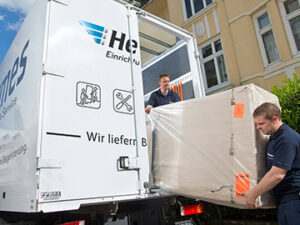
Choosing the right logistics provider is therefore crucial for retailers and manufacturers. The competence of the delivery team directly affects customer satisfaction—and thus reviews, complaints, and repeat purchases. Hermes Einrichtungs Service (HES) offers two-person handling with technical training for e-bike deliveries. The teams:
- mount and align the handlebar,
- mount the pedals,
- adjust the saddle height,
- check fork bolts and front wheel attachment,
- and remove packaging if needed.
Conclusion: Technology Requires Competence—Especially on the Last Mile
E-bikes are technical products that require technical delivery. Battery safety and assembly expertise are essential for a proper handover. The last mile determines whether a high-quality product becomes a convincing user experience—or starts with frustration. Retailers and manufacturers who rely on specialized logistics partners create the conditions for customers to get on and ride immediately.