From port to living room: With their strategic partnership, Hermes Einrichtungs Service (HES) and Kemena GmbH are creating an end-to-end solution for complex supply chains. Since November 2024, the two companies have combined their expertise into an integrated service portfolio that places transparency, speed, and sustainability at the center of goods transport—supporting retailers, manufacturers, and importers alike.
Two Partners with Complementary Strengths
At the core of the collaboration is the combination of two complementary service areas. Kemena contributes its long-standing experience in warehousing and first-mile logistics. This includes container pick-up from ports, rail transport, contract logistics, and professional inventory management across four sites with a total of around 190,000 square meters of storage space.
A central component of Kemena’s logistics strategy is Just-in-Time (JIT) assembly. Products or components are only manufactured, assembled, or packaged when a specific customer order exists—demand-driven rather than stockpiled. This principle prevents overproduction, reduces inventory, shortens lead times, and enables individual customer requirements to be met with maximum efficiency.
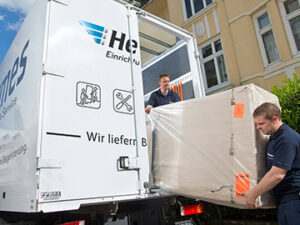
Hermes Einrichtungs Service complements these strengths with its expertise in end-customer distribution of large-volume products. The company operates Germany’s largest two-person handling network and is also active in other European markets such as Austria, Switzerland, France, and the Netherlands.
With average delivery times of 3.5 working days and optional express solutions, HES serves retailers and manufacturers of furniture and large electrical appliances who rely on dependable logistics processes.
The joint offering thus covers the entire chain—from international procurement, interim storage, and cross-docking processes to delivery to end customers, including assembly, installation, and disposal of packaging and old appliances. For manufacturers, retailers, and importers, this means fewer interfaces, greater transparency, and improved planning reliability.
Benefits for Different Target Groups
- Retailers benefit from reliable first-mile coverage, professional warehousing at Kemena, and daily handover of goods to HES. This structure enables fast forwarding to end customers while ensuring a transparent returns process.
- Manufacturers gain a more efficient supply chain, guaranteed product quality up to final delivery, and additional services such as assembly and installation. This reduces complaint rates, especially for complex goods.
- Importers leverage Kemena’s international connections via container and rail transport, as well as direct integration into the national distribution network. Daily distribution to around 50 HES depots accelerates market entry and shortens lead times.
- Marketplaces profit from seamless integration into the joint logistics network of Kemena and HES. Orders are processed just-in-time and delivered directly to end customers—ideal for dynamic omnichannel models.
Together, this creates an integrated solution that connects global logistics with local service quality.
Sustainability as a Core Element of the Partnership
A key focus of the partnership is the decarbonization of logistics processes. Both companies are investing heavily in emission-reducing technologies and circular economy practices.
- Kemena generates two-thirds of its electricity through its own photovoltaic systems and relies exclusively on electric forklifts. More electric trucks are also being deployed, particularly in shuttle traffic such as the hub transport from Kemena to HES.
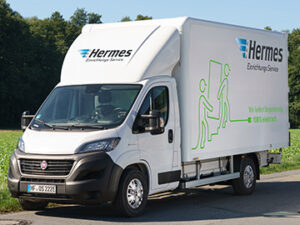
- HES is electrifying the last mile with a growing fleet, including e-Sprinters with large batteries. Already, up to 72 of Germany’s 80 largest cities can be supplied fully electrically, saving up to 2,830 tons of CO₂ per year. This is supported by over 200 charging points and the use of certified green electricity.
Together, both partners focus on industry-specific circular logistics, recycling processes, and consistent resource conservation. The wide range of measures makes it clear that sustainability is an integral part of the business model for HES and Kemena. Both companies view ecological responsibility as a prerequisite for future-proof delivery structures.
“The three pillars—charging infrastructure, electrified fleet, and green electricity—form the foundation of HES’s sustainability strategy and directly contribute to the Otto Group’s climate goals,” says Heiko Hufenbach, Business Development Manager and Strategic Key Account Manager at HES. “Kemena complements this approach with its own investments in photovoltaics and electric trucks. Together, this creates a coherent overall concept that anchors ecological responsibility throughout the entire supply chain.”
HES and Kemena: Early Feedback from Practice
The partnership between HES and Kemena has been in place since November 2024. Even within the first year, the synergies proved successful: companies that opted for the new specialized logistics concepts were able to use them to build their national and international omnichannel business.
Feedback has been positive: the cooperation enabled tailored processes with individually adjusted cut-off times and short response times. Especially in the competitive environment of electronics and furniture retail, the close integration of first mile and last mile pays off. Products reach the market faster and are available to end customers in less time—a decisive factor for companies seeking to optimize their time-to-market.
An Alliance with Future Prospects
The partnership between HES and Kemena is clearly geared toward growth. Plans include entering new markets, attracting additional customer groups, and consistently expanding logistics infrastructure. In addition, both companies aim to drive investments in automation and sustainability and make their cooperation more visible through joint market activities.
Through this strong alliance, retailers, manufacturers, and importers gain access to a service offering that goes beyond traditional logistics and has the potential to fundamentally reshape how supply chains are organized in the future.