Black Friday, Cyber Monday, Christmas: The hottest phase of the retail year is both a challenge and an opportunity for many companies. But to seize the opportunities, more is needed than discounts and temporarily increased staff. Timing is also crucial in peak-season preparation. Only when logistics, sales, and forecasting act in harmony can operational peaks be managed and customer expectations met – without hectic activity, errors, and additional costs.
Why Good Preparation is Mandatory
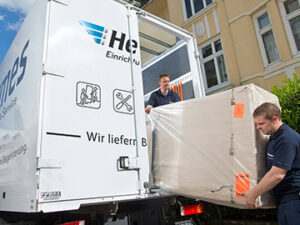
When order volumes skyrocket around Black Friday or during the pre-Christmas season, the strategic approach should have been defined long ago. Tightly timed windows, concentrated delivery days, limited resources, and the highest customer expectations converge. Anyone who does not start preparations by September at the latest risks overloaded systems, missed delivery promises, and dissatisfied end customers. Especially in the area of 2-person handling, which includes adherence to deadlines and complex services such as assembly or old appliance removal, the processes in the peak season must be cleanly planned with sufficient lead time.
However, a realistic capacity framework can only be defined when sales, logistics, and customer service combine their plans. Sales campaigns should therefore not be planned in isolation, but closely coordinated with dispatch and route planning. If order peaks are generated due to promotions, it must also be ensured that these can be cushioned logistically.
Peak-Season Planning Needs Data, Experience, and Clear Communication
However, a reliable forecast for peak-season preparation does not arise on its own. It is the result of data evaluation, experience, and communication. Above all, the following questions are crucial for planning in advance:
- What do we sell when and in what volumes?
- How many deliveries require installation and assembly services?
- Which regions are potential hotspots with particular effort (for example, inner-city locations, old buildings, assembly services)?
The answers to these questions should not only be negotiated internally. Above all, the open exchange with external logistics partners leads to capacities being coordinated in good time and service levels being met. In this way, those responsible for the logistics chain are able to adjust personnel planning and define time windows realistically. The additional services such as installations, assembly or packaging disposal can also be coordinated reliably and bindingly.
A peak-season preparation is therefore primarily a coordination project based on three pillars:
1. Forecast with Reality Check
Historical data is important, but not enough on its own. Retailers should include new product launches and promotional activities, as well as possible catch-up effects or market changes, such as changes in purchasing power or inflationary trends. In addition, it is recommended to play through flexible scenarios with “Best Case/Worst Case” assumptions in order to prepare your own capacities for different demand situations.
2. Plan Sales Measures Only With Logistics Alignment
A frequent scenario: Sales plans special promotions, but without taking delivery capacities into account. The result is promises that sometimes cannot be kept on the last mile. Instead, it is advisable to align planned sales campaigns with deliverers, warehouse capacities, and available resources at an early stage. Product ranges with high service requirements – for example, with installation or assembly – should be highlighted and taken into account separately in route and personnel planning.
3. Decide Together With Logistics Partners
Logistics service providers such as HES can only work efficiently if they are involved in peak-season preparation at an early stage. Close coordination on specific needs, reliable schedules, and planned volumes enables personnel and technology to be coordinated precisely. Early bookings not only ensure availability – they also increase the operational quality in the hot phase of the high seasons.
Prepare 2-Person Handling Professionally and Carry it Out Smoothly
Especially for products that go beyond the classic parcel size – such as televisions or fitness equipment – delivery logistics are particularly sensitive. In 2-person handling, it is crucial that all processes interlock cleanly and the delivery teams are optimally prepared. Every inconsistency has a direct impact on the customer journey, in the best case still with a positive outcome, in the worst case as a trigger for frustration or queries.
A central success factor is personnel planning. This involves both available capacities and the right qualifications. Activities such as professional assembly, connecting devices, or a brief introduction to the operation require experience and technical know-how. The technical equipment must also be right: carrying aids, stable packaging materials, and transport safeguards must be ready for use in order to bring sensitive goods safely to their destination. The sooner retailers, brands, and logistics service providers jointly define their processes for the peak-season strategy, the better the 2MH teams can operate on site – even under maximum load.
Set Up Communication Flows – Before the Peak, Not in the Middle
In addition to physical preparation, customer communication is a critical factor in the high season. Misunderstandings, unclear time windows, or missing information are the main causes of frustration, although they can be easily avoided. Best practices for peak-season communication are:
- In Advance: Order confirmations should contain clear information on the selected delivery option, the planned delivery period, and additional services already booked. In addition, possible delays in the high season can be pointed out here.
- The Day Before: Customers receive a reminder by email or SMS with the bindingly planned delivery time window. This ensures that the appointment can be reliably kept.
- On the Day of Delivery: In the event of departure or foreseeable delays, active notification is provided by the 2-person team in order to create transparency and avoid unnecessary waiting.
- After Completion: The delivery is digitally confirmed, including a rating link or service feedback on request, in order to make quality measurable and identify potential for optimization.
These communication steps can already be prepared and automated in advance, especially in connection with tracking tools and real-time data. This makes the service plannable and the customer dialogue reliable. At the same time, the support team is relieved – another benefit of careful peak-season preparation.
Strategically Secure Returns and Returns
What is often forgotten during preparation: The return season is also part of the peak season. Because after the purchase, there is sometimes a return or an exchange for another model. Especially for warehouses and logistics, the burden increases when returns arrive unplanned and no coordinated processes are in place. Then warehouse space fills up, and costs also rise noticeably. If the return flow is considered from the beginning, sufficient capacities can be created and processes can be kept stable.
A well-thought-out returns management should therefore be an integral part of peak-season preparation. This includes the active organization of returns already at the time of delivery, for example by taking away old appliances or exchanging them on site. The question of how returned goods can be recycled or marketed should also be clarified at an early stage. 2-person handling specialists such as HES support here by taking old appliances directly from the customer and returning them via central processes. This eliminates separate collection trips, and the value creation of returns can also be managed more efficiently.
Conclusion: The Best Peak Season Starts Long Before the First Sale
Anyone who understands the high season as a logistical exceptional situation will be overwhelmed by it. However, those who treat it as a recurring planning task with fixed timings will win. A well-founded peak-season preparation means
- Forecasts with a sense of reality,
- Coordinated communication between sales and logistics,
- Early involvement of the 2-person handling partners,
- Clear service strategies and return processes.
HES accompanies retailers, brands, and shippers in not only surviving the peak season but actively shaping it with well-rehearsed teams and digital tools. The clear goal: to meet customer expectations, especially when it matters, and to profit from the increased demand.