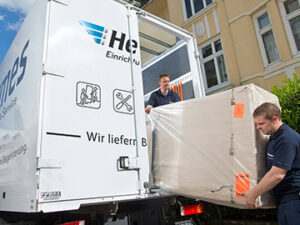
On June 11, 2026, the starting whistle will blow for the FIFA World Cup in the USA, Mexico and Canada. Many households decide to purchase a new TV set precisely during these weeks. For the consumer electronics sector, this marks a logistically intense period because: anyone who isn’t prepared now will deliver too late. And those who deliver too late lose customers to the competition.
A Pattern That Repeats – Reliably
World Cup, European Championship, Olympics: major sporting events are dependable drivers of the TV market. Past figures speak for themselves. In the weeks leading up to the 2024 European Championship, TV sales in Germany were already up 13 percent compared to the same period the previous year. Devices with screen sizes between 66 and 75 inches saw an increase of 63 percent roughly three weeks before the tournament began, while models over 75 inches recorded a 75 percent increase compared to the same week the year before.
These numbers show one thing: demand doesn’t rise gradually but rather in sudden spikes, concentrated within just a few weeks before and during the tournament. The purchase impulse is emotional, not planned. Many consumers only decide to buy a new TV once the match schedule is published or the final warm-up game airs on free TV—and they expect the device to arrive before the opening match. This creates a structural challenge for retailers: to meet demand within these narrow time windows, they must have their supply chains ready long before consumers even realize they will want a new TV.
Large-Screen TVs Are Not Just Another Parcel
What feels simple for consumers—order TV, have it delivered, switch it on—is a complex logistical task. A 75-inch device is bulky, heavy and extremely sensitive. It will not survive transport undamaged unless it is properly secured and handled by experienced professionals.
- Panels can suffer permanent damage from vibrations, even if this is not visible from the outside.
- A high-quality TV should not be left on the curb, exposed to weather and external conditions.
- Only when the device is switched on for the first time does it become clear whether it arrived intact—and this moment is crucial for customer satisfaction.
Ideally, the TV is carried to its final location, connected, configured and handed over ready for use. Customer expectations have risen significantly. Today, a fixed delivery time window is standard. Anyone still communicating vague timeframes like “delivery between 8 a.m. and 6 p.m.” loses trust before the device even leaves the depot. If, however, the delivery is announced within a narrow time window, followed by a call one hour before arrival and punctual ringing at the door, trust in service quality is established before the box is even opened.
Depending on customer needs, different service levels are required. While some buyers mainly expect reliable delivery to the installation site, others want additional services such as setup, configuration or wall mounting. With its modular delivery models HES Smart and HES Premium, Hermes Einrichtungs Service (HES) offers flexible, customizable solutions.
What Really Happens on the Last Mile
When transporting TVs and home entertainment systems, the real work often begins in the hallway. Narrow staircases, high floors without elevators, heavy packages that must be handled with care—this is everyday life in large-item delivery. At the same time, many buyers want their new TV mounted on the wall. A large-format TV requires a stable bracket, the right tools and proper expertise. Additionally, many customers consider old-device removal a basic requirement for purchase. Some even refrain from buying a new TV if they don’t know how to dispose of the old one. Retailers who do not offer old-device removal implicitly forgo a relevant customer segment.
All of this requires two-person handling by trained staff who carry, install and, if desired, mount the device. Those who cannot provide this automatically limit which products they can successfully ship—and how satisfied their customers will be.
What Matters in Peak Management for the World Cup
The key factor is how decision-makers handle demand peaks. For the German market, the peak window lies roughly between early and mid-June. To ensure smooth operations, shipment volumes must be forecast based on previous years’ data, market insights and the specific tournament schedule.
When all customers order at the same time, it is usually too late to quickly scale capacity, stock depots or redesign routes. Retailers who want to deliver reliably need partners like Hermes Einrichtungs Service, who can operationally manage the World Cup peak:
- Nationwide depot network: With around 50 depots across Germany, HES ensures that even short-notice orders can be delivered on time.
- Modular service packages: From basic two-person handling to wall mounting and old-device removal, service scope and capacity can be tailored to the retailer’s shipment volume.
- Notification and communication: Customers are informed in advance about their delivery time window—creating trust even before the device enters the home.
Conclusion: Every Delay Is a Missed Opportunity
The 2026 World Cup includes 104 matches over five weeks, with the opening match on June 11 and the final on July 19. The window of intense TV demand is narrow. If customers experience the first week of matches with a damaged device or poorly communicated delivery, the negative impression on their customer journey is difficult to reverse.
HES therefore relies on professional two-person handling and supports retailers and manufacturers with a nationwide network and integrated services—ensuring that the new TV is ready for kickoff right on time.